Why Use NAS for Storing Manga?

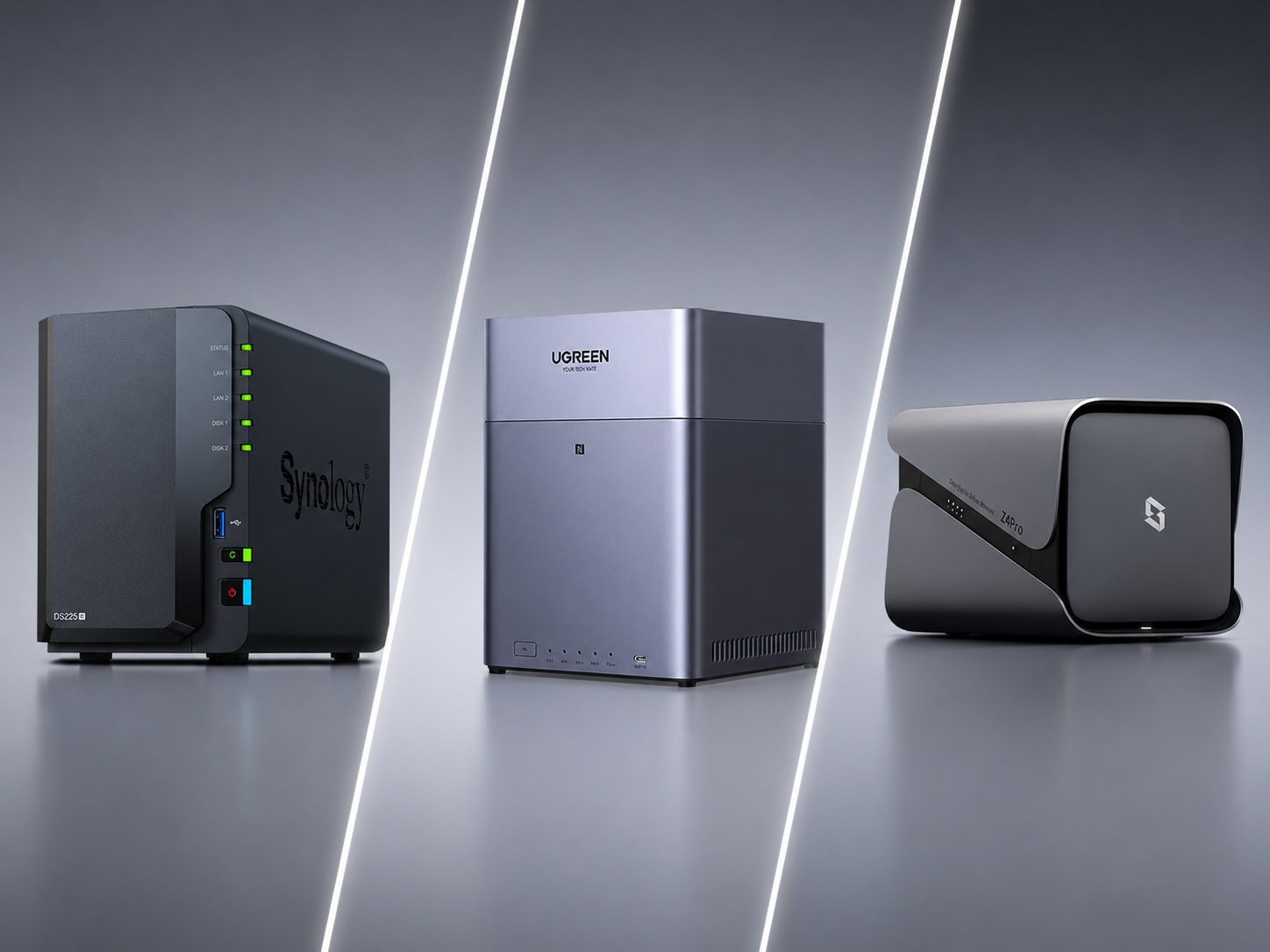
I'm planning to write a series about building a NAS manga library—this is the first article.
Let's start with the core question: why store manga on a NAS?
I've spent two years building a manga reader, and my home NAS holds several hundred gigabytes of manga. Along the way, I've encountered plenty of pitfalls in storing and managing these files. Friends often ask me: can't you just read on your phone? Why go through the trouble of setting up a NAS?
There are actually quite a few reasons. Let me highlight the five most important ones.
First, and most practical: storage space.
These days, iPhones start at 256GB and iPads at 128GB—sounds decent, but it's nowhere near enough for manga. A full One Piece collection alone is nearly 20GB in ZIP files. Add a few series like Slam Dunk, Dragon Ball, or Hunter × Hunter, and your phone storage fills up fast. Not to mention you need space for photos, WeChat, and various apps—there's no reason to sacrifice precious storage for manga. Even with iCloud, you're paying Apple monthly. NAS is different: mainstream models start at 4TB, and affordable ones can hold two 4TB drives, giving you 4TB usable space with RAID 1. That's plenty for several terabytes of manga. When you need more, you can swap in bigger drives—your phone can't upgrade its storage. And it's a one-time investment that lasts. My NAS is five or six years old and still works perfectly.
Some Manga Capsule users bought 256GB iPads specifically for storing manga, only to find themselves constantly deleting photos and WeChat messages after loading hundreds of gigabytes. It's really unnecessary. An entry-level NAS costs about the same as storage upgrades, but solves problems at a completely different scale.
Second: multi-device sharing.
This is a must-have for me. Reading on the iPad while lounging on the couch, continuing on the iPhone in bed, or sneaking in a chapter on my Mac during work—if manga is stored locally, every device needs a copy, and you have to figure out how to sync reading progress. It's a hassle. With NAS, all devices connect to the same library, and reading progress syncs automatically.
And it's not just for me—my family's devices can share the same manga library. I shared the NAS manga library with my wife, and she can open whatever she wants to read directly, without dealing with downloads and organization herself. The experience is somewhat like streaming, except the content is your own.
Third: streaming reading.
This is worth highlighting. Many people assume that storing manga on NAS means you have to download each chapter first, waiting forever before you can open it. That's not true—assuming your reader supports streaming reading.
Streaming reading means you can start viewing immediately, like watching a video with buffering. I designed Manga Capsule from the ground up with this approach: it loads the current page and adjacent pages first, then caches the rest in the background—no waiting required. This experience is actually better than local storage, where you still have to wait for downloads to complete. Streaming can even be faster to open.
Few readers currently support this, because each format requires different parsing logic. ZIP works one way, while Mobi and PDF are completely different—to achieve unified streaming, the underlying architecture needs separate implementations for each format. The technical investment is significant; the architecture design alone took half a year. But the experience improvement is transformative, and few readers can match it.
Fourth: easy management.
Once you have many manga files, management becomes a real issue. You download a few series on your computer today, save a few volumes on your phone tomorrow—files scattered across devices, and you can't remember where you left off halfway through a series. With NAS, you can establish a unified directory structure, organized by author or title, with everything in one place. Combined with the reader's bookshelf feature, organized directories map directly to your bookshelf—much cleaner than having files scattered everywhere.
Another advantage of NAS management: batch operations are convenient. Get a new batch of resources? Just drag them to the corresponding NAS folder from your computer—no need to go through your phone or iPad as a middleman. Organizing directories, renaming files, batch moving—everything is more efficient than on mobile devices.
Fifth, and what I consider very important: data security.
Manga collections take significant time and effort to gather and organize. If stored on your phone or computer, a lost or broken device, or accidental deletion, could wipe out everything. Backing up to cloud storage might work, but content like doujinshi can still get deleted. I had a friend whose cloud storage was purged—several terabytes of manga gone, including many rare older titles that are nearly impossible to find online anymore. After that, he was quickly convinced and got a NAS.
NAS supports RAID, so if one drive fails, your data survives. You can also set up automatic backups to another device or external hard drive—basically eliminating data loss concerns. The extra cost is minimal, but it insures years of accumulated resources. I think it's absolutely worth it.
So to summarize, the core problems NAS solves for manga storage can be summed up in four words: peace of mind. No more worrying about storage space, no more each device having its own copy, no more waiting to open files, no more messy management, no more fear of losing data. One investment, long-term benefits.
Next time, I'll discuss how to choose a NAS—what the differences are between various price points and brands. Stay tuned if you're interested.